
Project Number at Athens School of Fine Arts: 80089
Project Number at the Hellenic Foundation for Research and Innovation (HFRI): 7833
Athens School of Fine Arts, 27 July 2022 – 27 July 2024
This project could be placed within a network of studies that aim to shed light on the complex relationships between the Cold War policies including the European Recovery Program (ERP), known as Marshall Plan, on the one hand, and architecture and urbanism, on the other hand. Its main objective is to provide a precise and deep understanding of how architecture and urban planning, which are related to the Marshall plan politics, contributed to the formation of national identity in both Greece and Italy. Within this context, the study places much importance on the interplay between urban planning and politics. In other words, this research is built upon the general understanding that the Marshall Plan played a crucial role in the reconstruction of Europe after the Second World War. Architecture and urbanism were very important in this respect. A starting point for the project is the identification of certain key players regarding the connection between the politics of the Marshall Plan and agendas for urban design, such as the Greek architect and town planner Constantinos A. Doxiadis (1913-1975) and the Italian industrialist Adriano Olivetti (1901-1960). In parallel, the project springs from the observation that a couple of monographic studies related to similar research topics have been conducted, but that there are as yet no comparative studies providing a clear understanding of how certain key players in both politics and urban planning, like Doxiadis and Olivetti, contributed to the formation of national identity in different national contexts. Both Doxiadis and Olivetti were agents within the Cold War and Marshall Plan policies and contributed to the different respective trajectories in which Greece and Italy respectively ended up, while using the Marshall Plan for their reconstruction after the Second World War.
Acknowledgments: I am very thankful to the Hellenic Foundation for Research and Innovation (HFRI) for supporting the aforementioned project.
Here you can read an article (in Greek) related to this project

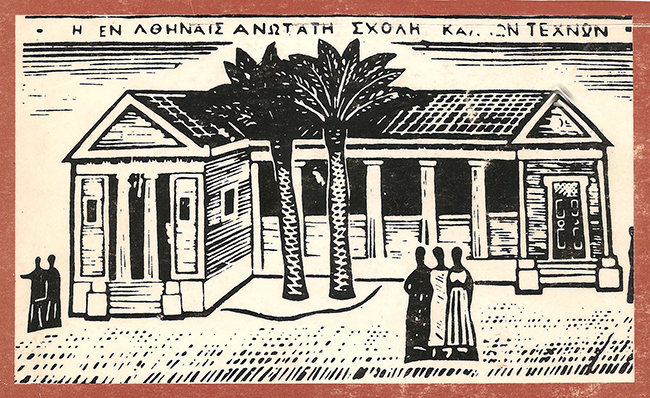
Postdoctoral Research Project at ETH Zürich
Principal Investigator: Dr. Ing Marianna Charitonidou
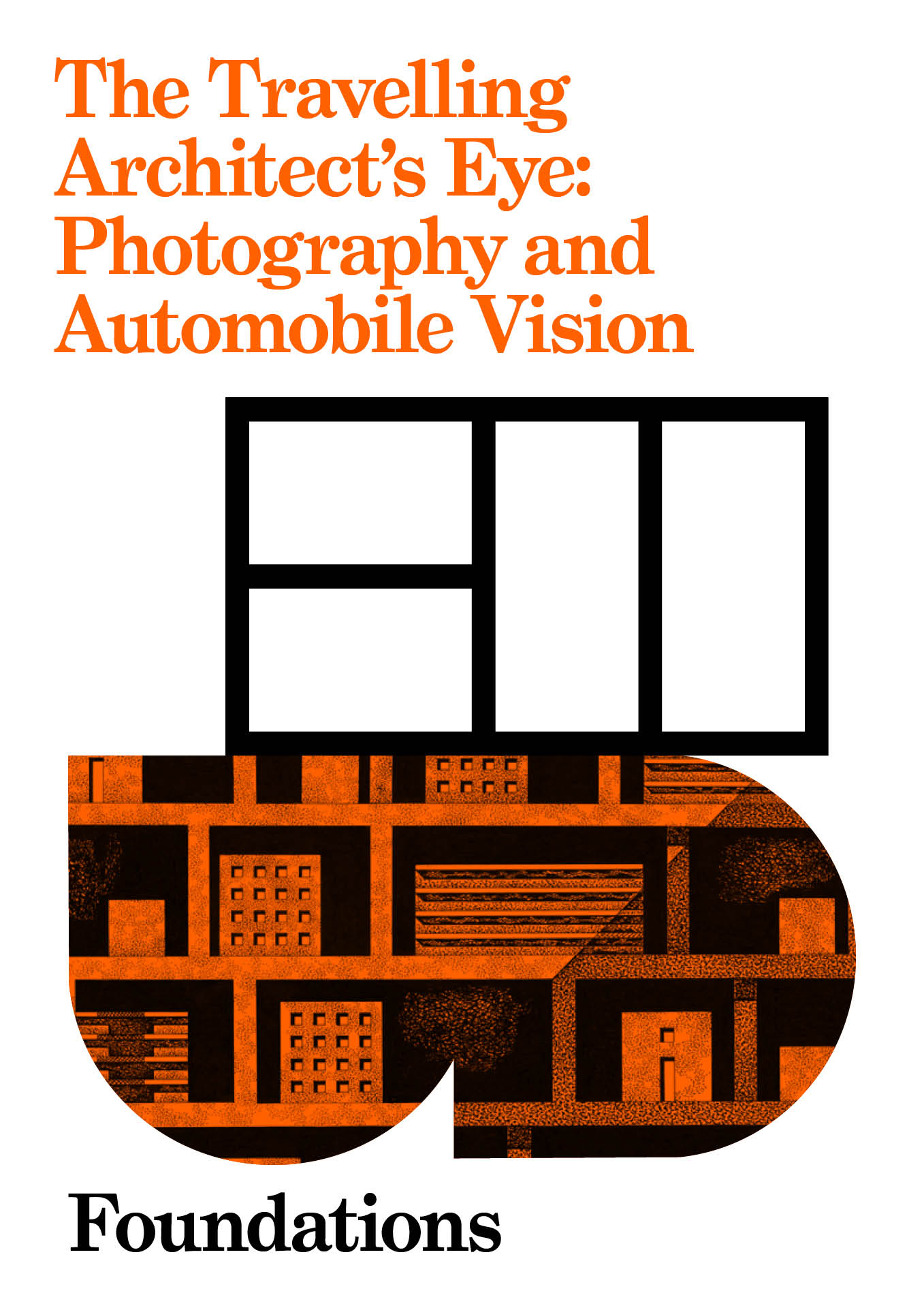

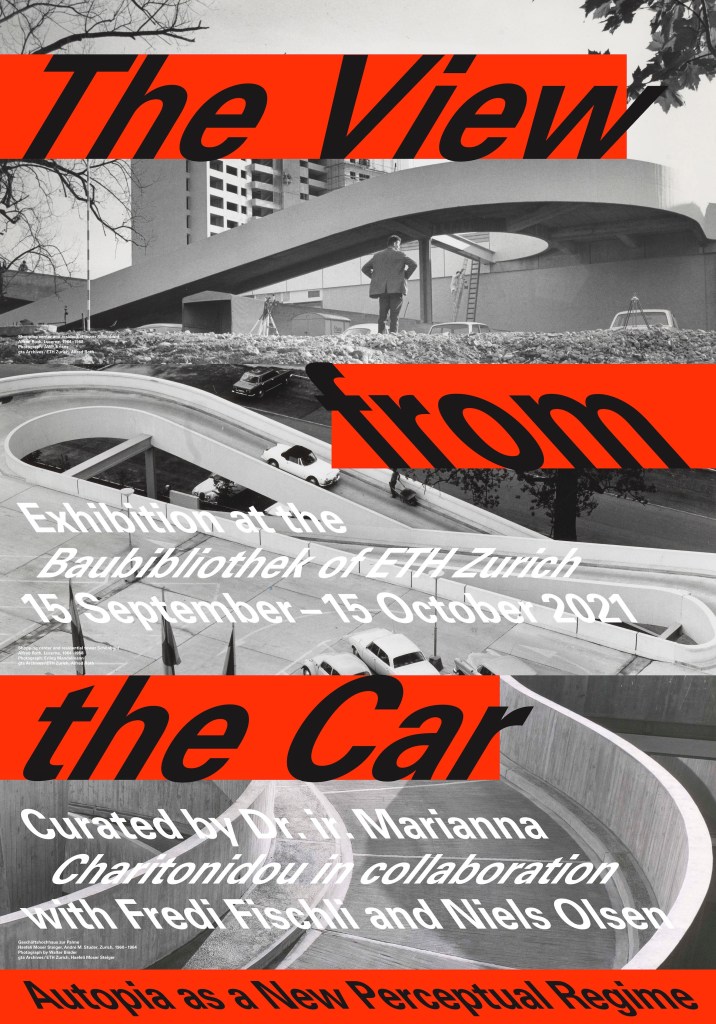
The View from the Car: Autopia as a New Perceptual Regime (2020-2021)
(Project Number: SEED-18 20-1)
Department of Architecture of ETH Zurich
This exhibition project entitled “The View from the Car: Autopia as a New Perceptual Regime” is based on the hypothesis that, through the visual juxtaposition of various photographs taken by several important architects of the 20th and 21st century from the car while travelling, the exhibition will make aware people about the impact of the car on the way we perceive the city. The exhibition will examine the status of the photographs that architects take during their travels by car and is based on the hypothesis that the view from the car has established a new epistemology of the urban landscape and the territory at large. The curatorship of the display of these photographs will offer the possibility to show visually the key hypotheses on which my research is based, and its key arguments and outcomes. Bringing together and juxtapose photographs and drawings from various archives conserved in several prestigious institutes and museums in both Europe and the United States, the exhibition aims to establish a transnational dialogue among scholars and architects regarding the epistemological mutations related to the new perceptual regimes that emerged thanks to the increasing role of the automobile in our quotidian experience of the cities. It will provide an overview of the role that photographing through the car played for the reinvention of the architectural and urban design strategies during the 20th and 21st century. This project aims to produce an exhibition and a catalogue that will focus on the architects’ automobile vision, bringing the results of my project to a broader international public, which should be informed about this important epistemological shift vis-à-vis the urban landscape.
Through the display of clusters of photographs that share the same epistemological concerns and their juxtaposition with drawings of projects on which the architects were working during the same periods they took the photographs that will be displayed in the exhibition it will become possible to render explicit visually the influence that the automobile vision had on the understanding of architecture and urban design as practice. The main objective of the exhibition is to communicate in a tangible and concrete way how the epistemological shifts related to the car are apparent in the ways the architects and urban designers conceived their projects. The exhibition, instead of including exclusively photographs by John Lautner, Alison and Peter Smithson, and Aldo Rossi – which are the main material resources under study in my postdoctoral project – will also include photographs taken during travelling by car by architects such as Le Corbusier, and Alvar Aalto, educators such as Laszlo Moholy-Nagy, and art historians such as Sigfried Giedion in the framework of their travels for the well- known CIAM (Congrès Internationaux d’Architecture Moderne), conserved at the gta archives at ETH Zürich, and also an ensemble of photographs taken during travelling by car by certain architects of the Team 10, such as Jaap Bakema and Aldo van Eyck, also conserved at the gta archives at ETH Zürich. The possibility to include in the exhibition photographs by other architects as well apart from the three cases on which my postdoctoral research project is focused will render explicit the epistemological shifts related to the intensified impact of the car on the perception of the city and on the ways one transverses the city.
For more info click here
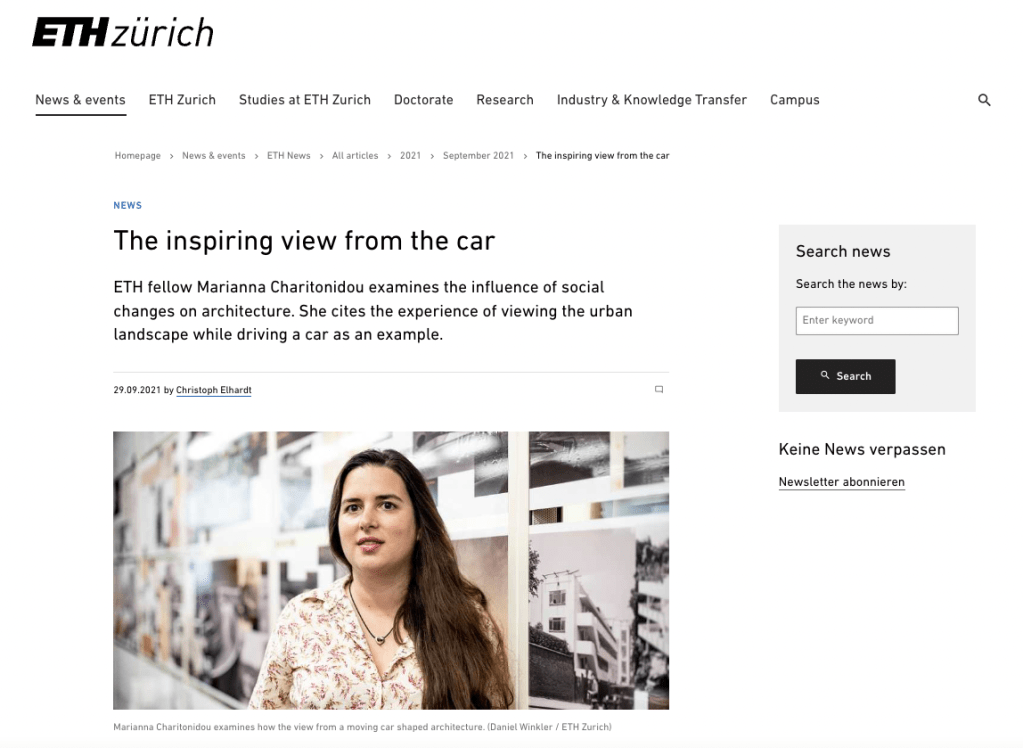
Postdoctoral research project at the National Technical University of Athens (2018-2022)
Principal Investigator: Dr. Ing. Marianna Charitonidou
The Fictional Addressee of Architecture as a Device for Exploring Post-colonial Culture: The Transformations of the Helleno-centric Approaches
This postdoctoral research project examined the relationships between architecture’s epistemology within the Greek and international contexts, scrutinizing their interdependences. It is focused on the analysis of three case studies: the travels to Greece of the Villa Medici pensionnaires in the 19th century, the trajectories of the architects of Mataroa, and the different approaches of bridging Helleno-centricism and modernism within the Greek context. The study aims to examine the following hypothesis: in periods of crisis what appears as the main domain of attraction regarding the ‘image’ of Greece is nature and its archetypal character, while in periods of normalization the ancient monuments constitute the main point of reference of the ‘image’ of Greece. Through the juxtaposition of the different ‘images’ of Greece and the way its antiquities and the travel to Greece are conceived as part of the ‘Grand Tour’ by the French, English, Italian and German architects and archaeologists, the project will trace a genealogy of the different conceptions of philhellenism within a transnational context. The understanding of how the conception of philhellenism has been transformed throughout time in relation with the politics corresponding to each era under study will be useful for understanding the different forms that the Helleno-centricism has been taking. Since the exchanges regarding the conception of the ‘image’ of Greece by the Greeks and the non-Greeks are interrelated, the method employed aims to understand both parts in a dynamic way. This methodological choice will offer us the opportunity to better conceive how the addressee of architecture changes throughout time in Greece and how its transformations are related to the different expressions that takes the Helleno-centric approach, which, despite its hybrid nature, can inform us regarding what is at stake at each historical time regarding the relationship of Greece with the exogenous models.
Here you can read an article in Greek based on this research project
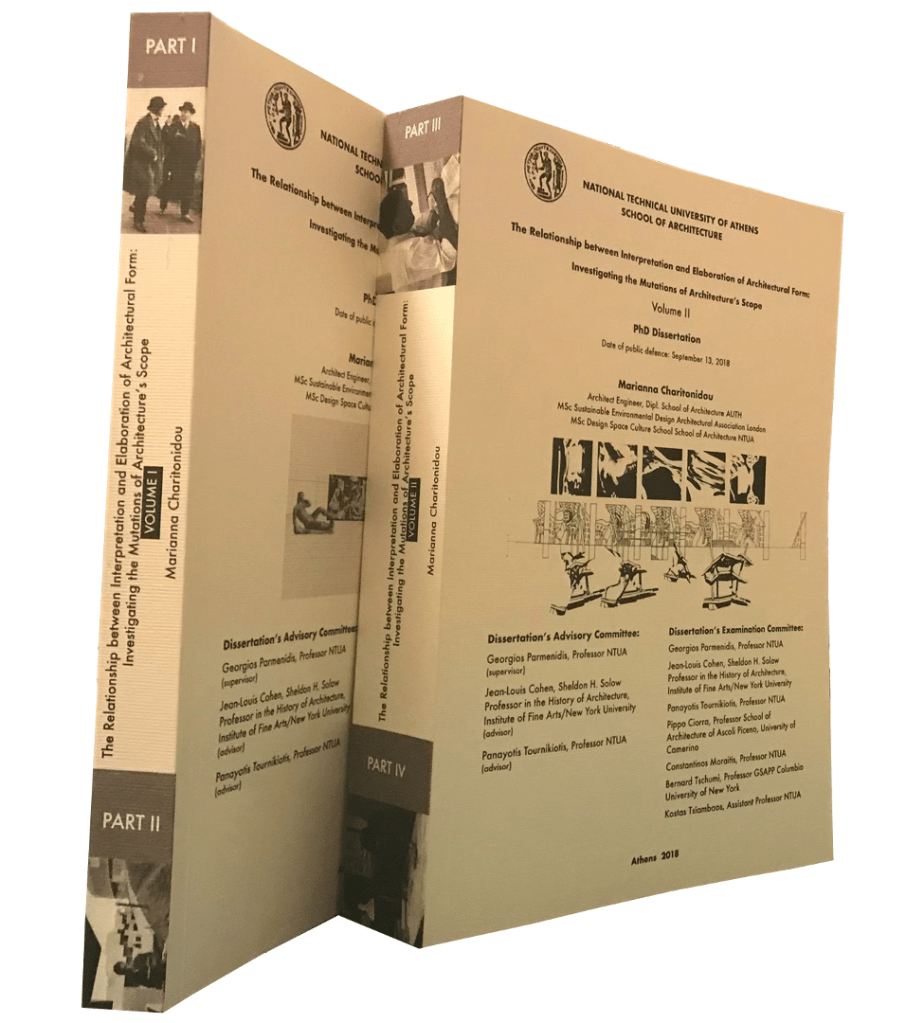
PhD Dissertation by Marianna Charitonidou: “The Relationship between Interpretation and Elaboration of Architectural Form: Investigating the Mutations of Architecture’s Scope”, Defended on 13 September 2018, https://phdtheses.ekt.gr/eadd/handle/10442/44354?locale=en
Dissertation’s Advisory Committee:
Georgios Parmenidis, Professor NTUA (supervisor)
Jean-Louis Cohen, Sheldon H. Solow Professor in the History of Architecture, Institute of Fine Arts/New York University (advisor)
Panayotis Tournikiotis, Professor NTUA (advisor)
Dissertation’s Examination Committee
Georgios Parmenidis, Professor NTUA
Jean-Louis Cohen, Sheldon H. Solow Professor in the History of Architecture, Institute of Fine Arts/New York University
Panayotis Tournikiotis, Professor NTUA
Pippo Ciorra, Professor School of Architecture of Ascoli Piceno, University of Camerino
Constantinos Moraitis, Professor NTUA
Bernard Tschumi, Professor GSAPP Columbia University of New York
Kostas Tsiambaos, Assistant Professor NTUA
The PhD dissertation is structured in four parts that correspond to four generations of architects, highlighting the conceptual tools and the epistemological concerns at the centre of the architectural discourse and the design strategies at each historical moment. It investigates the transformation of the epistemological object of architecture through the analysis of the mutations of the modes of representation that are at the centre of interest in each generation being considered and their addressee. In the first part of the dissertation, it is demonstrated that what was at the centre of interest was the individual and the bourgeois character of the addressee of architecture, and architecture symbolizes the value of its property by the addressee. Ms. Charitonidou examines the reasons for which the architects Ludwig Mies van der Rohe and Le Corbusier paid particular attention to the use of perspective representation. In the second part of the dissertation, which is focused on the work of Ludovico Quaroni, Ernesto Nathan Rogers and Team 10, two issues that are examined are the intensification of the interest in the concept of user and the impact of standardization of architecture on the concept of mass-production. In the third part of the dissertation, which is focused on the work of Peter Eisenman, John Hejduk, Aldo Rossi and Oswald Mathias Ungers, it is examined the shift from an understanding of architecture’s addressee as user towards an understanding of architecture’s addressee as subject. In parallel, it is presented how an understanding of architecture’s addressee as subject instead of its understanding as user implies that the meaning or signification of architecture cannot but be co-constructed by the architect and the addressee. In the fourth part, the dissertation examines the processes through which both Koolhaas and Tschumi transform the concept of program in architecture into a design strategy, taking as a starting point of the design process the dynamic nature of urban conditions. It turns out that the approaches of the above architects and the importance they attach to the kinaesthetic experience of architecture is based on the assumption that within the same subject there are opposing tendencies and forces. presents the main points of the transformation of the epistemological object of architecture in relation the transformation of the addressee of architecture at each historical time and the mutation of the identity of the citizen from generation to generation.
The choice to use a means very specific to architecture, such as its modes of representation, in order to diagnose the mutations of the way architecture incorporates or responds to situations that belong to different spheres, such as the social and political domains, reveals the articulations between architecture’s specificity and its social and institutional context. It also demonstrates that these connections between architecture’s means and the larger sphere can only be captured if our analysis takes as starting point the examination of what is at stake in specific architectural projects. The dissertation establishes a methodological tool for understanding the mutations of the epistemological object of architecture through the real and fictional transformation of the status of the addressee of architecture.

 Dr. Marianna Charitonidou